
Firewalls in Orbit
Inside the race to defend space infrastructure from hackers, rogue states, and digital chaos.

Over 10,000 satellites are now orbiting our planet, many tied into both civilian life and military operations. That digital sprawl has turned orbit into a massive cyberattack surface, from hacktivist intrusions to state-backed disruptions like the 2022 ViaSat incident. Space and cyberspace, once separate realms, are now deeply interlinked, and yet governance is lagging far behind this evolvng threat.
In her paper “Establishing a Governance for Cyber Operations in Outer Space”, Clémence Poirier of ETH Zurich maps the increasingly tangled frontier where cyber warfare meets orbital defense. Through interviews and case studies across France, Germany, the UK, and the United States, the study dissects how each nation divides responsibility for protecting satellites from cyberattacks. France and Germany delegate defense largely to cyber commands, while their space commands remain focused on physical or operational threats. The U.S., in contrast, embeds cybersecurity within the Space Force itself, building specialized “cyber squadrons” to guard networks, launches, and command systems. The UK sits somewhere in between, with overlapping jurisdictions under Strategic Command and the National Cyber Force.
What emerges is a pattern of bureaucratic drift. Most space commands were born around 2019–2020, but defining who actually “owns” cyber defense remains murky. In Europe, information sharing between agencies is often ad hoc. In the U.S., fragmentation persists despite heavy investment, as industrial contractors and intelligence agencies juggle overlapping roles. The ViaSat hack exposed this governance chaos, forcing the NSA to take over coordination when the company couldn’t manage an attack spanning multiple nations.
Indeed, there are human and structural challenges that make this more than a policy problem. Many personnel in space and cyber commands are veterans of older domains, not digital specialists. Recruiting and retaining talent with both orbital and cyber expertise is difficult, even for the U.S. Space Force, which offers six-figure reenlistment bonuses. The data flood from satellites, sensors, and cyber networks is overwhelming new commands still struggling to integrate analytics, training, and interoperability.
National security structures were built for a pre-digital era, as armed forces depend increasingly on commercial space systems, the boundaries between public and private defense blur. Cyberattacks on satellites could cripple communications, navigation, and surveillance in an instant, and adversaries can exploit not just software flaws but the confusion over who’s responsible. Without clear roles and rapid coordination, spacefaring nations risk paralysis when the next major orbital cyberattack hits.
Europe’s space commands lag behind the U.S. in operational cyber readiness, but all nations face the same existential dilemma, space systems are now critical infrastructure, and their protection demands unified doctrine, sustained funding, and a hybrid workforce fluent in both orbital and digital warfare. The tech, talent, and threats are all evolving faster than the governance designed to contain them. If we don’t synchronize our cyber and space commands soon, the next conflict may not begin with a missile launch, but with a silent breach hundreds of kilometers above Earth.
In other news
A commercial jet cruising at 36,000 feet was hit mid-air by an unknown object, causing its windshield to crack and forcing an emergency diversion. Investigators now believe it was likely a high-altitude weather balloon operated by WindBorne Systems, and not the some space-debris scenario as it was initially floated. - Ars Technica
In actual space debris news, a chunk of smoking wreckage found about 30 km east of Newman in Western Australia is believed to be debris from the fourth stage of a Chinese Jielong launch, marking for yet another uncontrolled re-entry incident. - ABC News
A California start-up, Reflect Orbital, plans to launch more than 4,000 orbital “space mirrors” designed to reflect sunlight onto Earth’s surface after sunset and before sunrise, but astronomers warn that the plan would massively brighten the night sky, wreaking havoc for night-sky observation! - Space.com
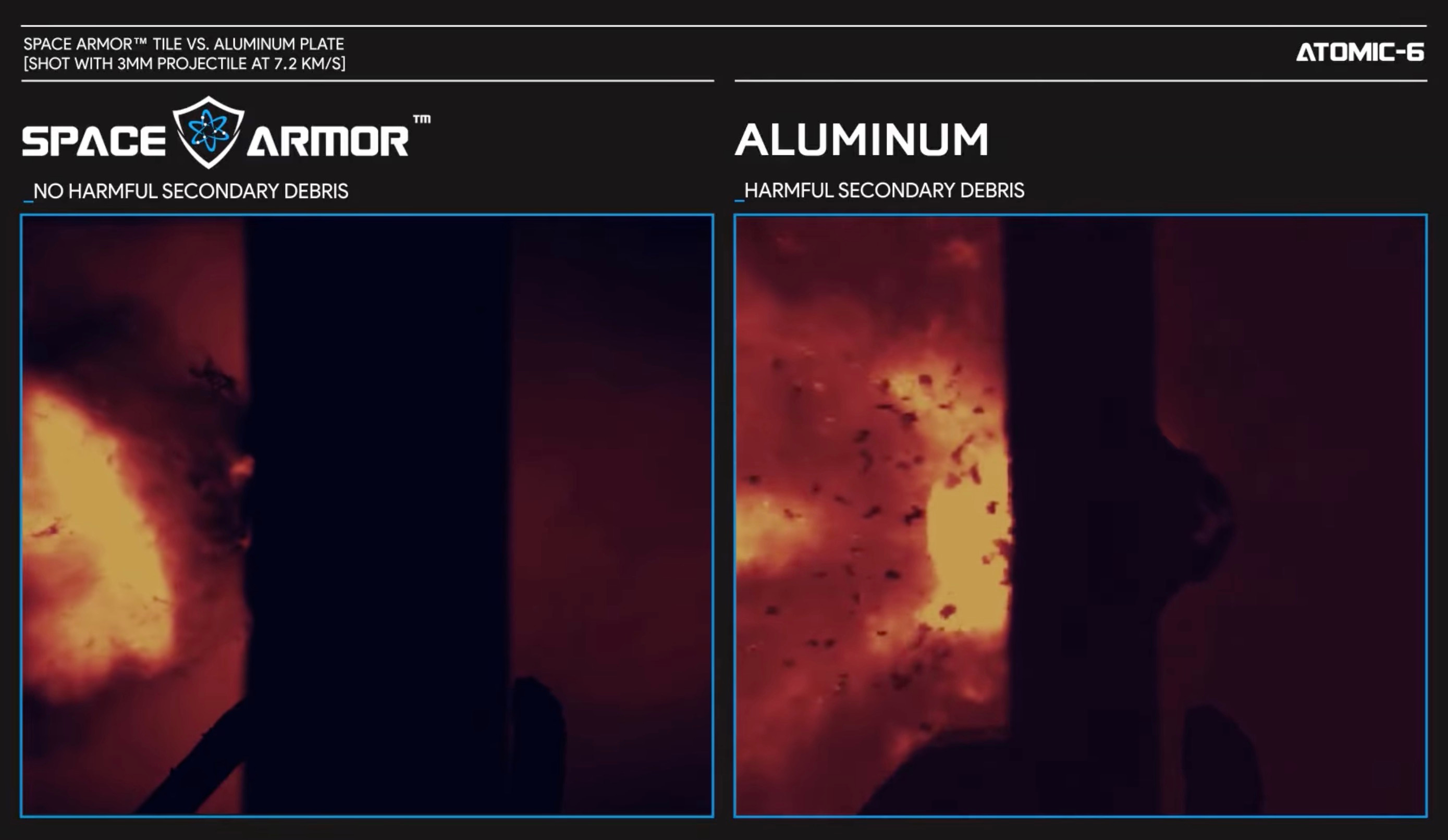
Atomic‑6, has developed a new composite shield called “Space Armor” aimed at protecting spacecraft from high-speed debris while still allowing radio communications through. The company says the material can stop objects travelling at up to Mach 21, comes in versions for 3 mm and 12.5 mm debris, and is thinner and lighter than traditional metal designs. - ajc.com
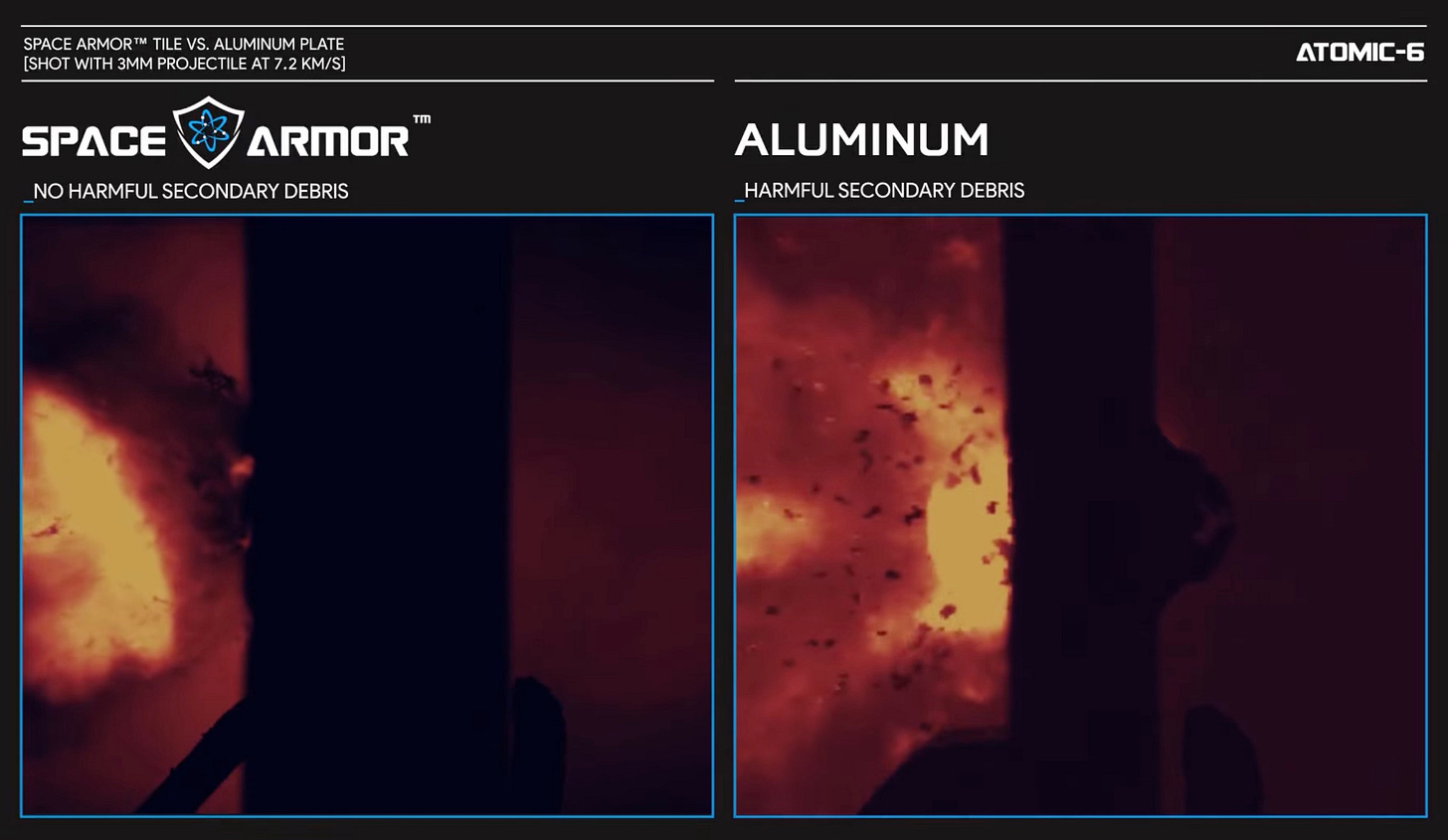
Credit: Aromic-6
Interesting Posts & Videos
Ken Eppens argues on LinkedIn that the U.S. has failed to invest meaningfully in active debris removal despite decades of warnings. The technology exists, but what’s missing is political will and leadership bold enough to treat orbital cleanup as a national imperative.
In a recent seminar, Jack Wright Nelson exposed that space debris is a “wicked problem” rooted partly in the Outer Space Treaty, which makes space free for all but owned by none, creating a tragedy of the commons. He suggests that evolving international law, including insights from the ICJ’s climate change advisory opinion, could pave the way for binding global rules on debris mitigation.
Dan Harkins warns that with nearly 13,000 satellites in orbit, space weather has become a major operational threat. Heightened solar activity is increasing atmospheric drag, causing satellites like Starlink’s to fall back to Earth at alarming rates. Resilience should rely on better space weather forecasting and onboard sensing tech that lets satellites adapt autonomously.
Thanks for reading.
Until next time!